Invoix is a Solana-based invoicing platform that lets users create blockchain-powered invoices using Web3 wallets. I ran an independent QA assessment of the mobile web app to evaluate the invoice creation workflow, wallet integration, usability and overall experience across multiple environments.
Objective
Validate the complete invoice creation workflow, evaluate wallet connectivity, identify usability and accessibility issues and uncover defects affecting platform reliability, so users can create invoices smoothly across supported wallets and environments.
Testing activities
Exploratory Testing
Functional Testing
UI/UX Testing
Mobile Web Testing
Wallet Integration Testing
End-to-End Workflow Testing
Cross-Environment Validation
Accessibility Testing
Bug Reproduction
Bug Documentation & Reporting
Key findings
critical
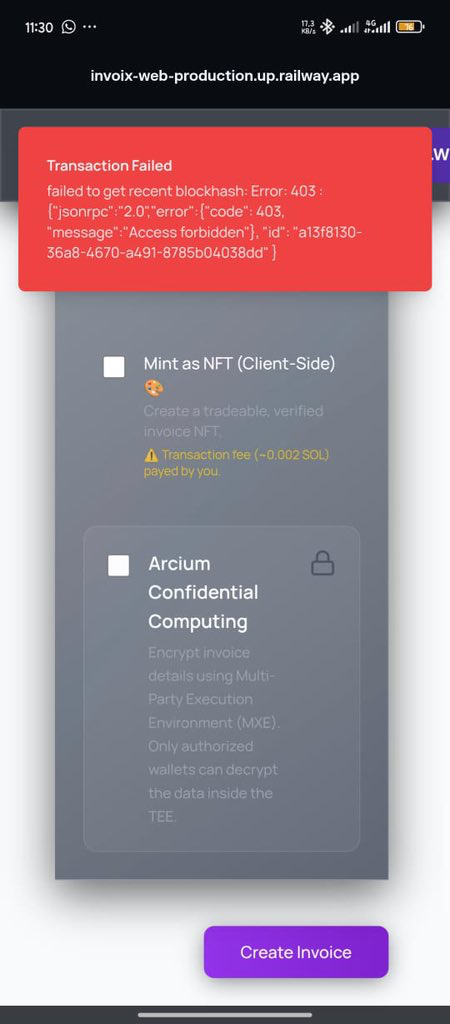
Invoice creation failure
Creating an invoice consistently failed with the error: failed to get recent blockhash: Error: 403 - Access forbidden. This completely blocked users from the platform's primary function.
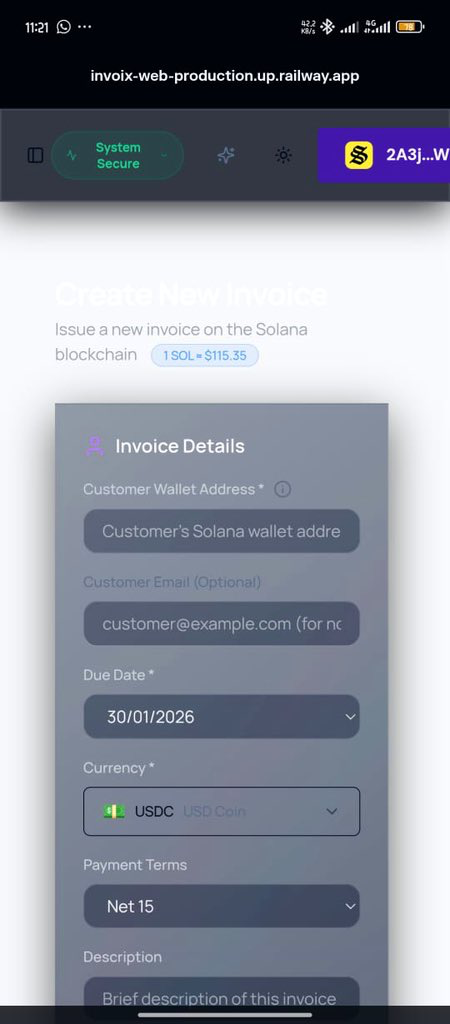
Placeholder text and input fields on the invoice form were hard to read in Light Mode.
ImpactReduced readability and accessibility, and a higher chance of user input errors.
Validation performed
The invoice failure was reproduced in Phantom Wallet and multiple other Solana wallet providers, in both Light and Dark Mode, on a mobile browser. The consistent behavior pointed to the backend RPC configuration rather than a wallet-specific problem.
Evidence
Low contrast between placeholder text and input fields in Light Mode.Invoice creation returning a 403 Access forbidden error.
Recommendations
Improve text and input field contrast in Light Mode to improve readability and accessibility.
Investigate the RPC endpoint configuration returning the 403 Access Forbidden error.
Re-validate invoice creation after the backend fix across multiple wallet providers and environments before deployment.
Outcome
The assessment surfaced a critical backend issue that prevented invoice creation and usability problems affecting accessibility. Every finding was documented with reproduction steps, severity, evidence and recommendations so the team could prioritize fixes before wider adoption.